
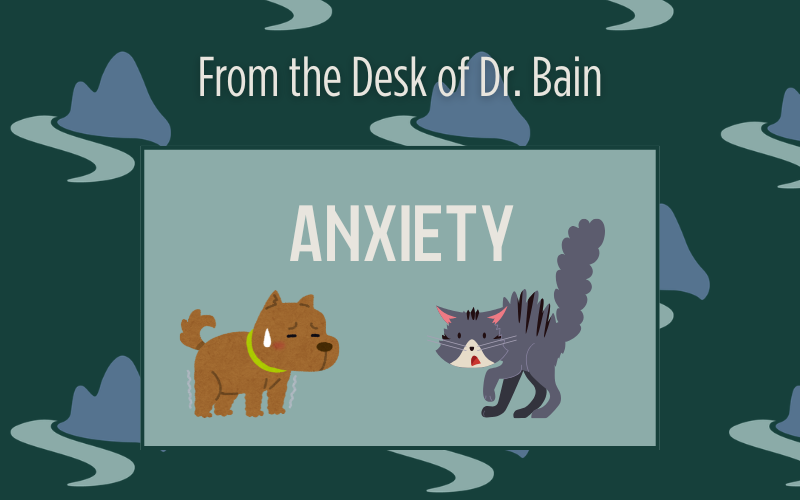
What is Pet Anxiety?
Anxiety is an unfortunate reality for many of our pets. It is both stressful for the pet as well as for you as a pet parent out there watching them struggle. Anxiety can be manifested in any number of ways and triggered by just about anything, just think of the people you know who deal with anxiety. We are going to focus are the two most common categories we see in clinic, which is situational anxiety revolving around stressful events and separation anxiety.
Situational Anxiety in Dogs and Cats
Situational anxiety is all too common, especially at the veterinary clinic. We see it in the clinic, at the groomers, during parties, and during thunderstorms or fireworks. Not all pets are stressed by the same triggers, but it is important to acknowledge your pet’s triggers because there is a lot we can do about it.
Anxiety around a location or actions can look like trembling, hiding, avoidance, or even aggression. It is completely normal for them to feel anxious when they don’t know what is going on and something unusual is happening to them. The first step is acknowledging the signs and doing something about them. If your pet is stressed at a pet care facility, start by looking for one that specializes in stress free handling. How someone approaches and touches your pet can have a massive difference in their response. Next, see if that facility offers “happy visits”. These are visits where nothing “bad” happens to your pet and they focus on getting them used to the place.
Choosing a Stress Free Veterinary Experience
Here at Southern Trails, we understand how stressful coming to the vet, or even getting in a carrier can be. That’s why we focus on creating a low-stress, fear-conscious veterinary experience for your pets. We feed snacks and try to play with them to get them used to the staff and clinic without restraint or needle pokes; it helps to bring them hungry! Lastly, for those pets that need a little extra, we recommend pre-visit medications. Similar to how a person may need medication to calm down before flying on a plane or going to the dentist, there are many safe options we can offer your pet to help them deal with stress and anxiety.
Noise Anxiety: Thunderstorms and Fireworks
A fear of loud noises, such as thunderstorms or fireworks, is so common that it needs its own section. Unlike going to the vet or the groomers, there isn’t really any training you can do to help. Signs of fear include trembling, hiding, pacing/panting, or even self-harm while attempting to escape a crate or run. For these pets, we lean heavily on medications to get them relief. There are a variety of options on the market that all work a bit differently, so it is important to discuss your pet’s response to any particular medication and the timing associated with their trigger. Most medications need to be given before loud noises occur. Give us a call so we can discuss your pet’s specific needs.
Separation Anxiety in Dogs and Cats
Separation anxiety is its own daily struggle for both pets and pet parents. Dogs and cats are both very social animals and being alone can sometimes cause a lot of stress. How your pet deals with their stressors are typically what brings them to see me. Signs of separation anxiety range from constant vocalization, pacing/panting, peeing or pooping in the house, to destructive behaviors. If you are uncertain if your pet shows any of these signs, consider placing a camera in your living room or on their crate while you are gone to see how they do.
Treatment for separation anxiety is not an easy or quick fix. We must readjust how your pet responds to the stimulus of being alone. This is best done through behavior modification and sometimes includes daily medication, like Prozac. The key to treatment is identifying when your pet acknowledges when you are about to leave and starts to get anxious. That moment needs to be reconditioned into something positive for your pet to try and interrupt their negative spiral. I tend to recommend special, high reward treats that are only used for these instances. Food toys are another way to keep them engaged and happy while you aren’t there. If you are having trouble identifying your pets’ triggers or implementing effective strategies, I recommend talking to a trainer that specializes in behavior modification. We know a few and would be happy to give you some specific recommendations.
Anxiety is a major issue for many of our pets. Acknowledgement is key. There is no magic bullet for anxiety, but if we take a holistic approach, we can really improve the quality of life for your pet and reduce your worry!
Looking for a Low-Stress, Fear-Conscious Vet Near You?
If your pet struggles with anxiety, whether it’s vet visits, loud noises, or being alone, you don’t have to manage it by yourself.
Call Southern Trails Vet today to schedule a consultation and create a personalized anxiety treatment plan for your pet.
Because veterinary care should never feel scary.