
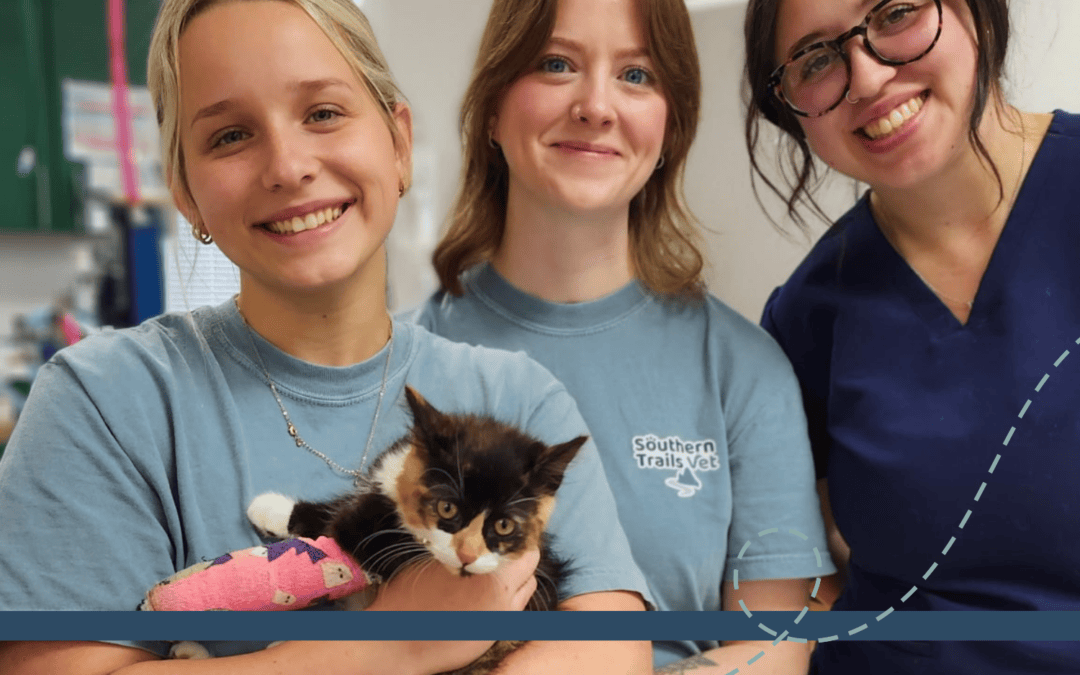
Why Is My Pet Scared of the Vet? Here’s How to Help
Does your dog start shaking when you pull into the vet’s parking lot? Or does your cat disappear the second the carrier comes out?
If vet visits are stressful at your house, you’re not alone. Plenty of dogs and cats get nervous about going to the veterinarian, even when they’re perfectly relaxed at home.
And we get it. Watching your pet feel scared when you’re just trying to keep them healthy is tough.
Here’s the good news: Your pet isn’t being difficult, and there are ways to make veterinary visits easier.
At Southern Trails Vet in Evans, GA, we believe understanding your pet’s fears is just as important as addressing their medical needs. Let’s talk about what’s going on and how you can help.
Why Do Pets Get Nervous at the Vet?
Think about it from your pet’s perspective. They’re taken away from their comfortable home, brought somewhere unfamiliar, and examined by people they don’t know. Even the friendliest veterinary hospital can feel overwhelming.
A few things commonly contribute to veterinary anxiety.
Unfamiliar Surroundings
Veterinary hospitals are full of new smells, sounds, animals, and people. Some pets handle those changes just fine, while others need more time to adjust.
Cats can be especially sensitive to leaving their familiar territory, and dogs may become uncomfortable around unfamiliar people or other animals.
Previous Experiences
Pets remember how experiences made them feel. If a previous appointment involved pain, restraint, or fear, your pet may associate the veterinary hospital with those feelings.
Sometimes the anxiety starts before you even leave home because your pet recognizes the carrier or car ride.
That doesn’t necessarily mean anyone did anything wrong. Some medical procedures are uncomfortable, and our pets don’t understand why they’re necessary.
Uncomfortable Handling
Your dog might love belly rubs at home but feel differently about being held still during an examination.
When pets feel frightened or trapped, they may pull away, freeze, growl, or hiss. These behaviors aren’t always signs of aggression. Sometimes they’re simply communicating that they’ve had enough.
Pain or Illness
A pet who’s hurting may be less comfortable with handling. Arthritis, ear infections, dental pain, and other health problems can make an examination more difficult.
If your pet suddenly becomes sensitive to touch or behaves differently than usual, let your veterinarian know. There may be a medical reason behind the change.
How Can You Tell If Your Pet Is Anxious?
Not every frightened pet makes a scene. Some become unusually quiet or still, which can make their stress harder to recognize.
Common signs of anxiety in dogs and cats include:
- Trembling, pacing, hiding, or trying to escape
- Panting when they’re not hot or exercising
- Repeated lip licking, yawning, or turning away
- Flattened ears, a tucked tail, or a tense body
- Growling, hissing, barking, or resisting handling
- Refusing favorite treats or becoming unusually still
These behaviors can mean different things depending on the situation. What matters is noticing when your pet seems uncomfortable and sharing those observations with your veterinary team.
You know your pet better than anyone, and that information helps us provide better care.
5 Ways to Make Vet Visits Less Stressful
You probably won’t turn a nervous pet into a vet-loving social butterfly overnight, but a few simple changes can make a real difference.
- Make Carriers and Car Rides More Familiar
If your cat only sees their carrier before a vet appointment, they’re going to figure out what it means.
Try leaving the carrier out at home with a cozy blanket inside. Let your cat explore it at their own pace, and occasionally add a favorite treat.
For dogs, short car rides that end somewhere fun can help create better associations with travel.
If your pet gets carsick or becomes extremely distressed in the car, talk with your veterinarian about ways to help.
- Practice Gentle Handling at Home
When your pet is relaxed, gently touch areas that are commonly examined, like their paws, ears, and shoulders.
Offer treats or praise, keep sessions short, and stop if your pet seems uncomfortable.
The goal isn’t to force them to tolerate handling. It’s to help them feel more comfortable with it over time.
If your pet has a painful condition or reacts strongly to touch, ask your veterinarian for guidance first.
- Bring Something Familiar
A favorite blanket, familiar towel, or special treat can help some pets feel more secure.
For cats, covering the carrier with a lightweight towel may reduce visual stimulation during travel. Just make sure there’s plenty of ventilation.
And if your pet refuses treats during the appointment? That’s okay. Anxiety can affect appetite, and that tells us something about how they’re feeling.
- Tell Us What Makes Your Pet Nervous
This one’s important.
Does your dog panic around other animals? Does your cat hate having their paws touched? Has your pet had a difficult appointment in the past?
Tell us! And don’t forget to mention what helps them feel better.
At Southern Trails Vet, we want to understand your pet’s personality and experiences so we can consider adjustments that may make their visit easier.
You bring the knowledge of your pet. We bring the medical expertise. Together, we figure out what works.
- Ask About Low-Stress Care Options
Not every pet needs the same approach.
Some benefit from gentler handling, extra time, or positive reinforcement. Others may need additional support to manage significant anxiety.
For certain pets, prescription anti-anxiety medication before an appointment can help reduce stress and make handling safer. It’s not the right choice for everyone, but it’s worth discussing if your pet really struggles.
Our team includes Fear Free trained team members, and we work to reduce unnecessary fear, anxiety, and stress during veterinary visits.
We can’t promise your pet will suddenly love coming to the vet, but we can take their comfort seriously and work with you to find a better approach.
What If My Pet Is Still Scared?
Some pets need more time and support, especially if they’ve been anxious about veterinary visits for years.
And that’s okay.
Progress doesn’t always mean your dog happily trots through the door or your cat starts purring on the exam table. Sometimes it means they’re a little calmer during the car ride or recover more quickly after an examination.
Those small improvements matter.
If your pet continues to struggle, talk with your veterinarian about a personalized plan. Depending on their needs, that might include changes to appointment routines, training at home, or medication.
One thing we don’t want is for anxiety to keep your pet from getting medical care they need. If your pet is sick or injured, call your veterinary team so you can discuss the safest way to get them help.
Better Vet Visits Start With Understanding
Here’s the thing: there’s no one-size-fits-all solution for nervous pets.
What helps one dog may not work for another, and cats often have their own opinions about just about everything.
At Southern Trails Vet in Evans, Georgia, we’re a locally and independently veterinarian-owned practice led by Dr. Maria Flippo. We combine modern veterinary medicine with thoughtful, low-stress care because we want your pet to feel as comfortable as possible while getting the attention they need.
More importantly, we want to know you and your pet. That means listening to your concerns, explaining your options, and helping you make decisions without pressure or judgment.
If your dog or cat struggles with veterinary visits, let’s talk about it. We’ll work together to find an approach that makes sense for your pet and your family.
Looking for a caring veterinarian in Evans, GA? Contact Southern Trails Vet to schedule an appointment or ask how we can help make your pet’s next visit a little easier.
We’ve got you. And we’ve got your pet, too.